

A New Beginning for Your Smile: Everything to Know About Dental Implants
Clinical Reviewer: Dr. Rajasekaran
Specialisation: Maxillofacial Implantologist
Experience: 10+ years
Have you ever avoided smiling in photographs because of a missing tooth? Perhaps you find it uncomfortable to chew certain foods, or you have noticed a gap that affects the appearance of your smile.
Losing a tooth can influence more than your appearance. Depending on its position, it may affect chewing, speech and the alignment of nearby teeth. Over time, the jawbone in the area of a missing tooth may also undergo changes.
If you are considering a way to replace missing teeth, dental implants may be one option worth understanding.
Dental implants are small fixtures placed in the jawbone to support replacement teeth. They are designed to function as artificial tooth roots and can support individual crowns, bridges or full-arch restorations, depending on your dental needs.
However, dental implants are not suitable for everyone. Understanding the treatment process, recovery, cost factors and maintenance requirements can help you make an informed decision.
If you are exploring dental implants in Perungudi, Chennai, this guide explains what you should know before considering treatment.
What Are Dental Implants?
Dental implants are small, screw-shaped fixtures, commonly made from titanium, that are placed into the jawbone to support replacement teeth.
They are designed to act as artificial tooth roots. After placement, the implant gradually integrates with the surrounding bone through a process known as osseointegration. Once sufficient stability is achieved, a replacement tooth can be attached.
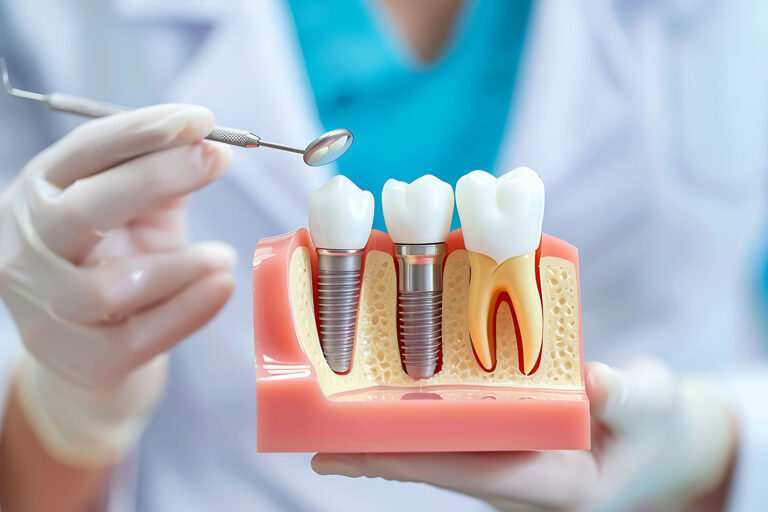
A dental implant restoration generally consists of three main components.
1. Implant Fixture
The implant fixture is the part placed inside the jawbone. It acts as an artificial tooth root and provides support for the replacement tooth.
2. Abutment
The abutment connects the implant fixture to the replacement tooth. It acts as the supporting connection between the implant and the final restoration.
3. Dental Crown
The dental crown is the visible replacement tooth attached to the implant. It is designed to restore the appearance and function of the missing tooth.
Together, these components provide a fixed tooth replacement option that can look and function similarly to a natural tooth when appropriately planned and maintained.
Why Do People Consider Dental Implants?
A missing tooth may not always cause immediate discomfort, but it can affect everyday activities and long-term oral health.
Some common reasons people consider dental implant treatment include:
- Difficulty chewing: Missing teeth can make biting and chewing certain foods uncomfortable.
- Changes in smile appearance: A visible gap may affect the appearance of your smile and confidence.
- Movement of nearby teeth: Adjacent teeth may gradually shift towards the empty space.
- Jawbone changes: The bone that previously supported a natural tooth may gradually lose volume after tooth loss.
- Problems with removable dentures: Some people experience movement, discomfort or difficulty adjusting to conventional dentures.
- Speech difficulties: Depending on the position of the missing tooth, certain sounds may become harder to pronounce.
Replacing a missing tooth is not always necessary in the same way for every patient. A dental examination can help determine whether replacement is advisable and which treatment option may be suitable.
What Are the Different Types of Dental Implant Treatments?
Dental implant treatment is planned according to the number of missing teeth, the condition of the jawbone and the patient’s overall oral health.
The commonly considered treatment options include:
1. Single Tooth Dental Implant
A single tooth implant is used when one tooth is missing. An implant fixture is placed in the jawbone and supports an individual dental crown.
It can replace a missing tooth without generally requiring the neighbouring healthy teeth to be reshaped for support, as may be necessary with a conventional dental bridge.
2. Multiple Tooth Dental Implants
When several teeth are missing, multiple implants may be used to support individual crowns or a fixed dental bridge.
The number and position of implants depend on the available bone, the location of missing teeth and the planned restoration.
3. Full Mouth Dental Implants
Full mouth implant rehabilitation may be considered when most or all teeth are missing or cannot be preserved.
Depending on the patient’s condition, a planned number of implants can support a full-arch fixed restoration or another suitable prosthetic option.
4. Implant-Supported Dentures
Implant-supported dentures use dental implants to improve the retention and stability of dentures.
Unlike conventional removable dentures that rest mainly on the gums, implant-supported dentures connect to implant attachments. Some designs can be removed by the patient for cleaning, while others are fixed and require professional maintenance.
The most appropriate treatment depends on the patient’s oral condition, treatment expectations and clinical findings.
Who Is a Suitable Candidate for Dental Implants?
Dental implants may be suitable for adults who have one or more missing teeth and want a fixed tooth replacement option. However, suitability cannot be determined by age or the number of missing teeth alone.
Your dentist evaluates several factors before recommending treatment.
Jawbone condition: Adequate bone volume and quality are important for implant placement. Additional procedures may sometimes be considered if bone support is insufficient.
Healthy gums: Active gum disease should be assessed and managed before implant treatment.
Overall health: Certain medical conditions and medications may influence healing and treatment planning.
Smoking habits: Smoking can increase the risk of healing complications and implant failure.
Oral hygiene: Patients need to maintain good daily oral hygiene and attend regular dental reviews.
Treatment expectations: The dentist should understand your needs and explain realistic outcomes, limitations and alternatives.
Can People with Diabetes Get Dental Implants?
People with diabetes may be able to receive dental implants. However, blood sugar control and overall health need to be evaluated before treatment.
Uncontrolled diabetes can affect wound healing and increase the risk of complications. Your dentist may coordinate with your treating doctor when necessary.
Is There an Age Limit for Dental Implants?
Dental implants are generally considered after jaw growth has finished. There is no single upper age limit that determines suitability.
Bone condition, medical history, gum health and the ability to maintain oral hygiene are important considerations when assessing a patient.
How Does the Dental Implant Procedure Work?
Knowing what happens at each stage can make the decision less overwhelming. Dental implant treatment usually takes place over multiple stages, although the exact process varies depending on the patient’s condition.
1. Initial Dental Consultation
The process begins with an examination of your teeth, gums and missing tooth area.
Your dentist discusses your medical history, current medications, previous dental treatments and expectations. This helps identify factors that may influence implant treatment.
2. Diagnostic Evaluation and Treatment Planning
Clinical examination and appropriate imaging, such as dental X-rays or a CBCT scan, may be used to assess the jawbone, surrounding structures and available space.
These findings help the dentist determine the implant position, size and restoration requirements.
3. Implant Placement
The implant fixture is placed into the jawbone through a planned surgical procedure under suitable local anaesthesia or another appropriate anaesthesia arrangement.
The procedure depends on the number of implants, surgical complexity and the patient’s clinical condition.
4. Healing and Osseointegration
After implant placement, the fixture needs time to integrate with the surrounding bone.
This process is called osseointegration. The healing period varies between patients and may be influenced by bone quality, implant stability and whether additional procedures are needed.
5. Abutment and Crown Placement
Once the implant has achieved the required stability, the abutment and replacement crown or another planned restoration can be attached.
The dentist checks the fit, bite and comfort before completing the restoration.
6. Follow-Up and Maintenance
Regular dental reviews help assess the implant, surrounding gums, bite and restoration.
Good oral hygiene and professional maintenance are important for supporting long-term implant health.
What Are the Benefits of Dental Implants?
Dental implants offer several potential benefits when they are appropriately planned and maintained. The benefits may vary depending on your oral condition and the type of restoration.
1. A Natural-Looking Tooth Replacement
Implant-supported crowns are designed to resemble natural teeth in shape, size and appearance. Their final appearance depends on the restoration design and individual oral condition.
2. Improved Chewing Function
Dental implants provide support for replacement teeth and may help restore chewing ability compared with having missing teeth.
3. Support for Jawbone Function
Implants transfer functional forces to the surrounding jawbone. This can help reduce the bone changes associated with an unfilled tooth space, although it does not prevent all bone loss.
4. No Need to Prepare Adjacent Healthy Teeth
For a single missing tooth, an implant-supported crown does not generally require the neighbouring teeth to be reshaped as support units, unlike some conventional dental bridges.
5. Fixed Tooth Replacement Option
Once the restoration is completed, the implant-supported tooth remains fixed in place rather than being removed for everyday use like a conventional removable denture.
6. Long-Term Treatment Potential
With suitable treatment planning, good oral hygiene and regular professional maintenance, dental implants can serve as a long-term tooth replacement option. However, their lifespan is not guaranteed and varies between individuals.
These benefits do not mean implants are the right choice for everyone. A clinical evaluation helps determine whether they are appropriate for your dental needs.
Dental Implants vs Dental Bridges vs Dentures: Which Should You Choose?
Dental implants are not the only option for replacing missing teeth. Dental bridges and dentures may also be appropriate depending on your oral condition, preferences and treatment requirements.
|
Feature |
Dental Implants |
Dental Bridges |
Removable Dentures |
|
Support |
Jawbone |
Adjacent teeth |
Gums and supporting structures |
|
Removable |
Usually fixed |
Fixed |
Removable |
|
Adjacent teeth preparation |
Usually not required for a single implant |
Often required |
Usually not required |
|
Jawbone stimulation at missing tooth site |
Provides functional stimulation |
Does not directly stimulate the missing tooth site |
Does not provide the same stimulation as an implant |
|
Maintenance |
Daily cleaning and professional reviews |
Cleaning around the bridge and regular reviews |
Daily removal and cleaning, with regular reviews |
|
Suitability |
Depends on bone, gums and health |
Depends on neighbouring teeth |
Depends on oral anatomy and patient needs |
There is no single option that is best for everyone.
Dental implants may be suitable for patients seeking a fixed replacement, while bridges or dentures may be more appropriate in other situations.
During a consultation, ask your dentist to explain the advantages, limitations, expected treatment time and cost of each suitable option.
What Is the Recovery Time After Dental Implant Surgery?
Recovery after dental implant surgery varies depending on the number of implants placed, the complexity of the procedure and individual healing.
Some patients experience mild swelling, tenderness or discomfort around the treated area during the initial recovery period. These symptoms generally improve as healing progresses.
However, bone integration takes longer than the initial soft-tissue healing. The final crown may be placed only after the dentist confirms that the implant is ready.
What Should You Do After Dental Implant Surgery?
Following your dentist’s post-operative instructions can support healing.
- Eat soft foods as advised during the initial recovery period.
- Avoid chewing directly on the surgical area until permitted.
- Take prescribed medication according to your dentist’s instructions.
- Maintain oral hygiene without disturbing the surgical site.
- Avoid smoking, as it can interfere with healing.
- Attend scheduled follow-up appointments.
- Avoid strenuous physical activity for the period advised by your treating dentist.
When Should You Contact Your Dentist?
Contact your dentist if you experience increasing pain, persistent or worsening swelling, fever, pus, uncontrolled bleeding or other unexpected symptoms.
Do not ignore symptoms that become worse instead of improving. Prompt professional assessment can help identify and manage potential complications.
How Much Do Dental Implants Cost in Perungudi?
The cost of dental implants varies from patient to patient because every treatment plan is different. The final estimate depends on clinical requirements, the implant system, the restoration and any additional procedures.
Some important factors that influence dental implant cost include:
1. Number of Implants Required
Replacing one missing tooth generally involves a different treatment plan from replacing several teeth or completing full mouth rehabilitation.
2. Type of Implant System
Different implant systems have different designs, components and pricing structures. Your dentist can explain the available options and their suitability.
3. Bone Grafting Requirements
If the jawbone does not provide sufficient support, bone grafting or another preparatory procedure may be recommended. This can add to the overall treatment cost.
4. Type of Dental Crown
The material and design of the final crown can influence the treatment estimate.
5. Diagnostic Tests and Additional Procedures
Imaging, tooth extractions, gum treatment and other procedures may be needed depending on your oral condition.
6. Follow-Up and Maintenance
The overall treatment plan should also explain the follow-up schedule and maintenance requirements.
What should you ask before starting treatment?
Request a written estimate that explains the implant fixture, abutment, crown, diagnostic procedures, additional treatments and follow-up costs.
When comparing dental implant treatment options in Perungudi, check what is included rather than comparing prices based only on an advertised starting amount.
A clear explanation of the treatment plan and fees can help you understand the expected expenses before proceeding.
How Long Do Dental Implants Last?
Dental implants are designed as a long-term tooth replacement option, but their longevity varies.
The implant fixture and the crown have different maintenance requirements. The crown may experience wear or damage over time and could require repair or replacement. The implant itself can also develop complications if the surrounding tissues become unhealthy.
Factors that influence implant longevity include:
- Daily brushing and cleaning between teeth.
- Regular professional dental check-ups.
- Gum health and management of periodontal disease.
- Smoking habits.
- Medical conditions that affect healing.
- Bite forces and habits such as teeth grinding.
- Timely attention to discomfort or changes around the implant.
Consistent maintenance plays an important role in protecting the health of the implant and surrounding tissues.
Common Myths About Dental Implants
There are several misconceptions about dental implant treatment. Understanding the facts can help you approach treatment with realistic expectations.
Myth 1 – Dental Implant Surgery Is Always Painful
Fact: Implant placement is generally performed under appropriate anaesthesia. Some discomfort, swelling or tenderness may occur afterwards, but the experience varies depending on the procedure and individual response.
Myth 2 – Dental Implants Are Only for Older Adults
Fact: Dental implants may be considered for eligible adults once jaw growth is complete. Suitability depends on oral and general health rather than age alone.
Myth 3 – Dental Implants Do Not Need Maintenance
Fact: Implants require daily cleaning and regular professional check-ups. Poor oral hygiene can contribute to inflammation and diseases affecting the tissues around implants.
Myth 4 – Dental Implants Last Forever
Fact: Dental implants can provide long-term function, but no treatment can guarantee a lifetime result. The implant and its restoration may develop complications or require maintenance over time.
Myth 5 – Everyone with Missing Teeth Can Get Implants Immediately
Fact: Patients need an individual assessment. Gum disease, insufficient bone, certain medical conditions and other factors may require treatment or additional planning before implant placement.
How Can You Maintain Your Dental Implants?
Proper maintenance is essential after completing dental implant treatment. Although implants cannot develop tooth decay, the surrounding gums and bone can still be affected by bacterial plaque and inflammation.
Simple daily habits can help keep your implants and surrounding teeth healthy.
- Brush twice daily using a soft-bristled toothbrush.
- Clean between teeth and around the implant using suitable interdental cleaning aids.
- Use recommended cleaning products as instructed by your dentist.
- Avoid using excessive force while brushing.
- Attend regular dental check-ups and professional cleaning when advised.
- Inform your dentist if you notice bleeding, swelling, discomfort or movement in the restoration.
- Avoid smoking and seek advice if you grind or clench your teeth.
Good maintenance helps protect the tissues supporting your implant and supports the health of your remaining natural teeth.
Why Choose Mr.Dentist for Dental Implant Consultation?
Choosing dental implant treatment involves more than selecting a replacement tooth. It requires careful assessment, treatment planning, appropriate clinical decisions and continued maintenance.
At Mr.Dentist in Perungudi, Chennai, patients can discuss their missing tooth concerns and understand the treatment options available.
Dr. Rajasekaran, a Maxillofacial Implantologist with 10+ years of experience, brings professional experience in implant dentistry, laser dentistry and root canal care.
Patients considering dental implants can discuss:
- Their missing tooth concerns and treatment expectations.
- Whether an implant is suitable for their oral condition.
- The need for diagnostic evaluation.
- Available tooth replacement alternatives.
- The expected stages of treatment and healing.
- Cost factors and ongoing maintenance.
The recommended treatment should always be based on an individual clinical assessment rather than a standard approach for every patient.
Take the First Step Towards Replacing Your Missing Teeth
Missing teeth can affect everyday comfort, confidence and oral function. Dental implants offer one possible way to replace them, but the right treatment depends on your individual dental condition.
At Mr.Dentist in Perungudi, Chennai, Dr. Rajasekaran brings 10+ years of experience in implant dentistry, laser dentistry and root canal care. A consultation can help you understand whether dental implants are appropriate, what the procedure involves and which alternatives may suit your needs.
If you are considering replacing a missing tooth, arrange a dental consultation to discuss your options and plan the next steps towards a healthier, functional smile.
Contact Mr.Dentist
- Address: No. R6, Panchayat Main Road, Corporation Road, Seevaram, Perungudi, Chennai – 600096
- Phone: +91 99624 27460
A consultation can help you understand your options and decide on a treatment plan based on your individual dental needs.
Frequently Asked Questions About Dental Implants
1. Are dental implants better than dentures?
Dental implants and dentures serve different needs. Implants provide fixed support for replacement teeth, while conventional dentures are removable. The right option depends on bone condition, oral health, budget and personal preferences.
2. How many days does it take to complete dental implant treatment?
The treatment may take several weeks to several months, depending on healing, bone integration and whether additional procedures are required. Your dentist can provide a more specific timeline after examination.
3. Can I eat normally after getting dental implants?
Patients are usually advised to eat soft foods during the initial healing period. Normal chewing can be gradually resumed according to the dentist's instructions and the progress of healing.
4. Can a dental implant replace a front tooth?
Yes. Dental implants can be used to replace missing front teeth when clinically suitable. Treatment planning considers appearance, gum condition, bone support and the position of neighbouring teeth.
5. Is bone grafting necessary for every dental implant?
No. Bone grafting is not required for every patient. It may be recommended when the available jawbone is insufficient to support the planned implant.
6.Can dental implants fail?
Yes. Although dental implants have good success rates in appropriately selected cases, failure can occur. Infection, poor healing, inadequate bone support, smoking and other health or mechanical factors may contribute.
7.Are dental implants safe for people with diabetes?
Some people with diabetes can receive dental implants, particularly when their blood sugar is well controlled. A medical and dental evaluation is important before treatment.
8.Do dental implants require special cleaning?
Implants require regular brushing and cleaning between teeth. Your dentist may recommend interdental brushes, floss or other cleaning aids based on the implant restoration.
9. Can I get an implant immediately after tooth extraction?
Immediate implant placement may be possible in selected cases. It depends on the condition of the extraction site, available bone, infection status and other clinical factors. It is not suitable for everyone.
10.What happens if I do not replace a missing tooth?
Depending on its position, a missing tooth may affect chewing, allow nearby teeth to shift and contribute to changes in the jawbone. A dentist can explain whether replacement is advisable in your situation.